ABS (acrylonitrile butadiene styrene) is a thermoplastic widely used in industrial manufacturing. Because of its good mechanical strength, impact resistance and processability, it is widely used in 3D printing, injection molding and other fields. However, in the process of processing, ABS materials often have the problem of "Warping", that is, the edges or corners of parts are lifted from the printing platform or mold, which affects the quality of finished products and even leads to the scrapping of parts. Therefore, preventing ABS material from warping is the key to ensure the success of processing.
First, the causes of warping
ABS material will shrink during cooling after heating and melting. Because of the different cooling rates of different parts of the material, the internal stress distribution is uneven, which leads to deformation and warping. Especially in 3D printing, when the bottom material is not well adhered to the printing platform, it will be separated from the platform by cooling shrinkage, resulting in warping.
Second, the specific measures to prevent warping
1. Control the temperature of the printing platform
When ABS is printed, it is recommended to use a heating platform and control the temperature between 100~110℃. High temperature can reduce the temperature difference when the material is cooled, reduce the shrinkage rate, and thus effectively reduce the warping. At the same time, it is also important to keep the temperature of the platform uniform.
2. Choose the right platform material
In order to enhance the adhesion between ABS and the platform, glass plate+glue, PEI plate, special ABS printing plate or coating ABS special solution (such as mixed solution of acetone and ABS) can be used. Good adhesion can effectively prevent the bottom surface from separating and reduce the risk of warping.
3. Close the printing environment and control the ambient temperature.
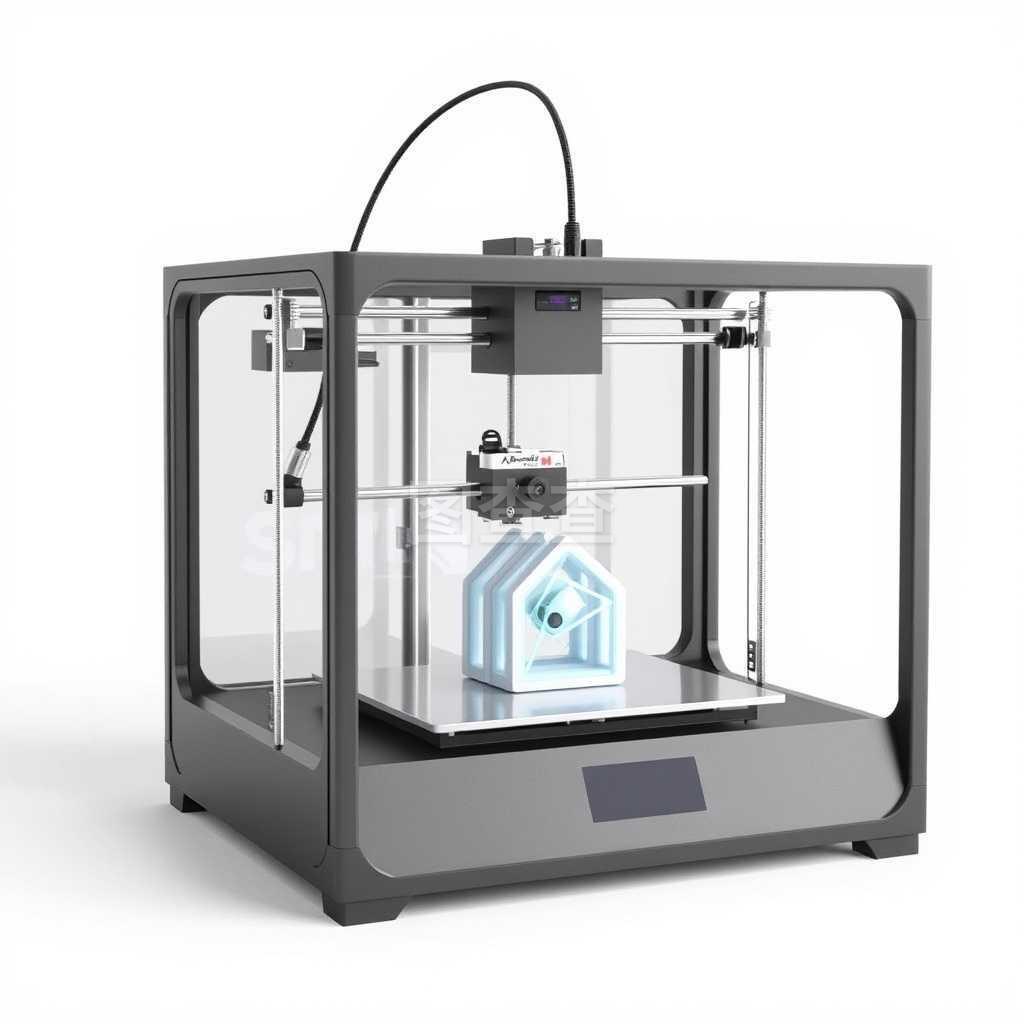
In the process of 3D printing, using a closed printing chamber or a heated printing chamber helps to maintain a stable ambient temperature and slow down the cooling rate, thus reducing the shrinkage and deformation of materials. The ambient temperature is suggested to be maintained at about 50~60℃.
4. Optimize the model structure and support settings.
When designing the model, try to avoid a large flat bottom, and design a supporting structure or a skirt to enhance the adhesion. Reasonable setting of the number of bottom layers and filling rate is also helpful to improve the adhesion of the platform.
5. Adjust the printing parameters appropriately
For example, reducing the printing speed of the first layer and increasing the extrusion amount of the first layer can improve the fit between ABS material and platform; At the same time, properly increasing the pressure between the nozzle and the platform is also helpful to strengthen the adhesion.
6. Post-treatment to relieve stress
For injection molded parts, internal stress can be relieved by annealing. The warping deformation caused by internal stress can be effectively reduced by keeping the parts in an oven at 80~90℃ for several hours and slowly cooling.
Third, the conclusion
In a word, preventing ABS from warping needs to start from many aspects such as material characteristics, processing technology, equipment configuration and environmental control. Only by fine control in each link can the molding quality and finished product rate of ABS products be effectively improved. With the continuous development of 3D printing technology and injection molding technology, it is believed that more efficient and intelligent anti-warping solutions will come out in the future, further expanding the application space of ABS materials.

 Hotline:18914229323

 18914229323
 huichangwen@126.com